


January 2026
Dhoni: The Beating Heart of Maldivian Seafaring
Before the Maldives was known for overwater villas and horizon-blending lagoons, it was known for movement. Between islands. Across reefs. With the seasons and the wind. At the centre of that movement was dhoni.
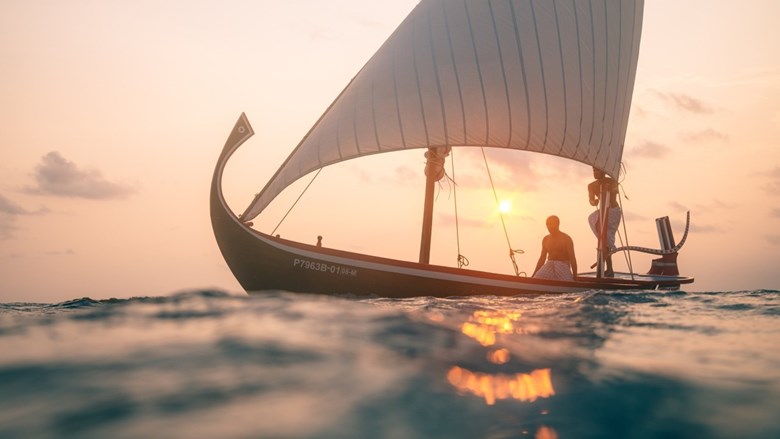
The traditional Maldivian dhoni is one of the oldest known seafaring vessels in the country. For generations, these long, narrow wooden boats carried fishermen to open waters, families to neighbouring islands, and entire communities through monsoon seas. Their shape was never drawn on paper. It was learned, refined, and remembered through experience.
Even its name tells a story of the wider maritime world. “Dhoni” is believed to draw from South Indian languages such as Tamil, Telugu, Konkani, and Kannada, while another thread traces back to a Persian word meaning yacht. Similar sounds appear in Malay too, where “tuoni” refers to a small boat. These serve as a quiet reminder that the Maldives has always been connected, long before borders were drawn on maps.
Crafted Through Generations
Traditionally, dhonis were crafted entirely by hand. Master carpenters, known in Dhivehi as “Maavadi”, led the process, taking measurements by eye and guiding their teams without written plans or blueprints. Boatbuilding knowledge was passed down through generations, and a single dhoni could take around sixty days to complete.
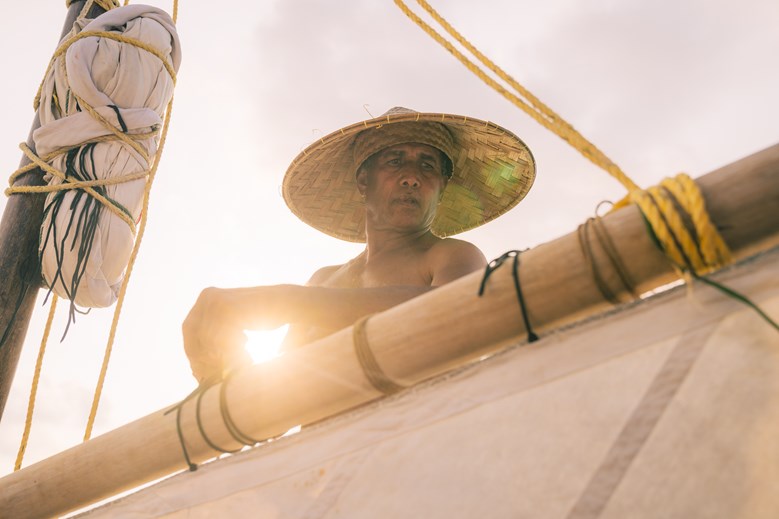
Early dhonis were built almost entirely from the coconut palm, the most abundant resource on the islands. Timber formed the hull. Coir rope, twisted from coconut husks, bound the planks together. The Dhivehi phrase for boatbuilding, “dhoani banun”, literally means “to tie together”. Long and perfectly balanced, the dhoni carries a silhouette that feels both distinctly Maldivian and quietly global. Its lines echo the Arabian dhow, shaped over centuries to suit shallow lagoons, shifting monsoon winds, and long days at sea.
Alifushi, in Raa Atoll, is renowned across the Maldives for its master boatbuilders. For decades, lead craftsmen would gather crews and travel there to build dhonis that could take up to two months to complete. Apprentices learned through watching and listening, absorbing techniques that were rarely written down. To this day, the most skilled traditional dhoni builders still come from Alifushi, each boat a matter of national pride.
Changing With the Monsoon
As trade expanded and maritime knowledge evolved, so did the dhoni. Square sailswoven from palm leaves gave way to triangular lateen sails, better suited to theIndian Ocean’s wind patterns. By the early 1970s, mechanisation began, and engines gradually replaced sails as the primary means of propulsion. Wooden dowels eventually replaced lashings, and later metal fastenings improved strength, while the essential hull design remained unchanged.
Today, many dhonis are built from fibreglass, chosen for its lighter weight and ease of maintenance. Yet on local islands, fishing dhonis are still often crafted using coconut timber planks, accommodating eight to twelve fishermen and following the same time-tested form. The design has proven its seaworthiness over centuries. Modern fishing vessels and even luxury cruisers built in the Maldives still follow the same fundamental hull shape, some stretching over thirty metres in length.
At Sun Siyam, dhonis continue to be part of everyday life on the water. They carry guests on snorkelling adventures, dolphin cruises and fishing trips, moving through the same lagoons and channels their ancestors once navigated. Each journey is a quiet continuation of a story that began long before any of us arrived


